Loading...
Personal projects
Loading...

Helping families choose a senior care home
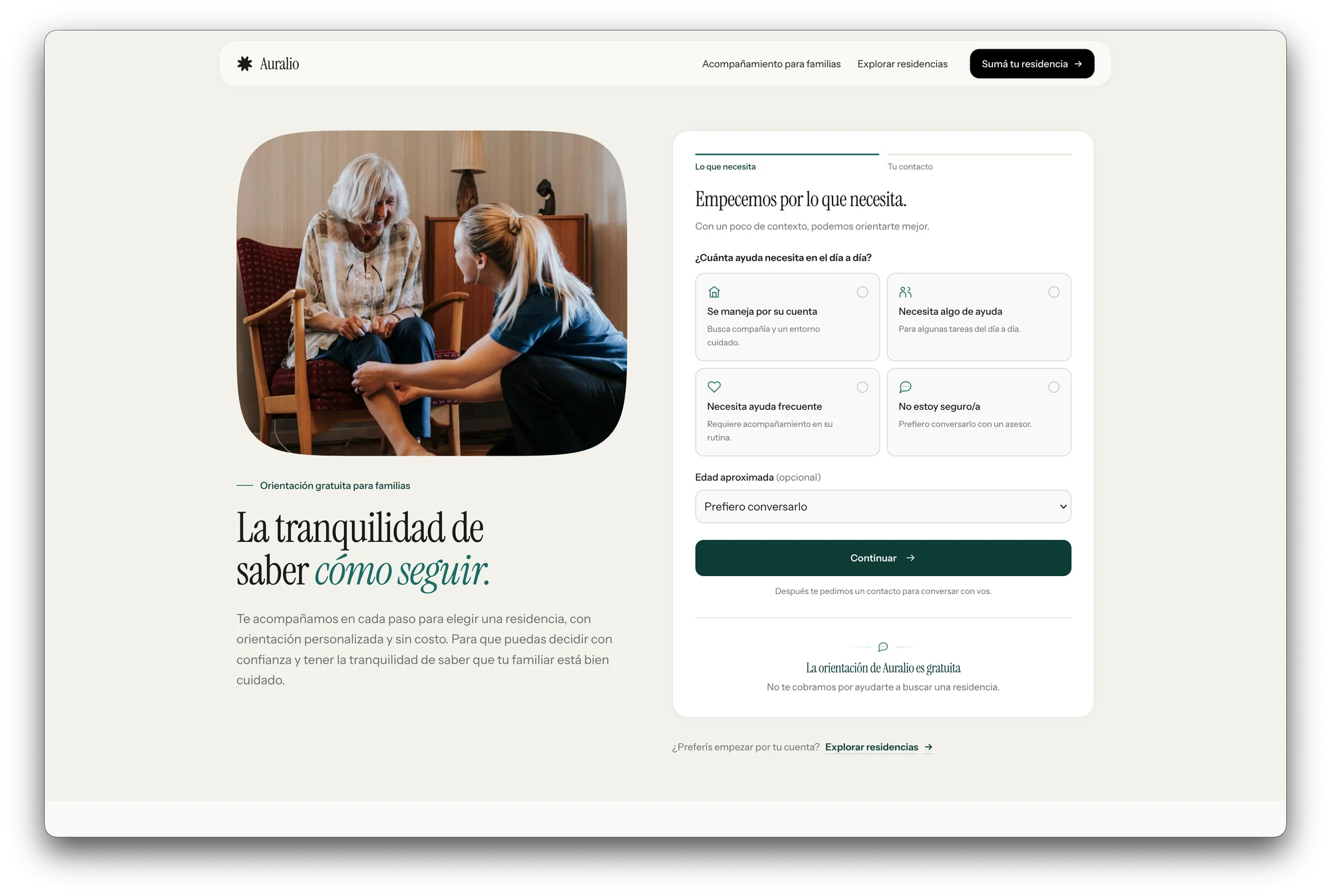
I designed and built Auralio, a B2B product that helps senior care homes in Argentina find clients. The public experience combines free guidance for families with a catalog of homes: people can explore options, compare care and contact a home based on what their case needs.
My mom has run a senior care home for over fifteen years. It is a field that has been part of my family for a long time, and Auralio was a chance to approach it through design and product development.
The name has a personal origin too: it is inspired by Aurelio, my maternal grandfather.
Auralio has two sides that need to work together: the care homes, which are the business’s clients, and the families, who use the service to find a place. The idea is to help homes reach the families looking for the care they offer, and to support that contact.
A family may know what area they want to search in without knowing what level of care their relative needs or which factors change the price. A list of names and phone numbers leaves those questions for separate calls and makes it hard to compare information.
I organized the family experience around two ways in: guidance for those who need help getting started, and a catalog for those who prefer to explore on their own. The option to talk to a person runs through both paths, because filters cannot always explain a family’s situation. For the home, the goal is to receive an inquiry with context about what that family needs.
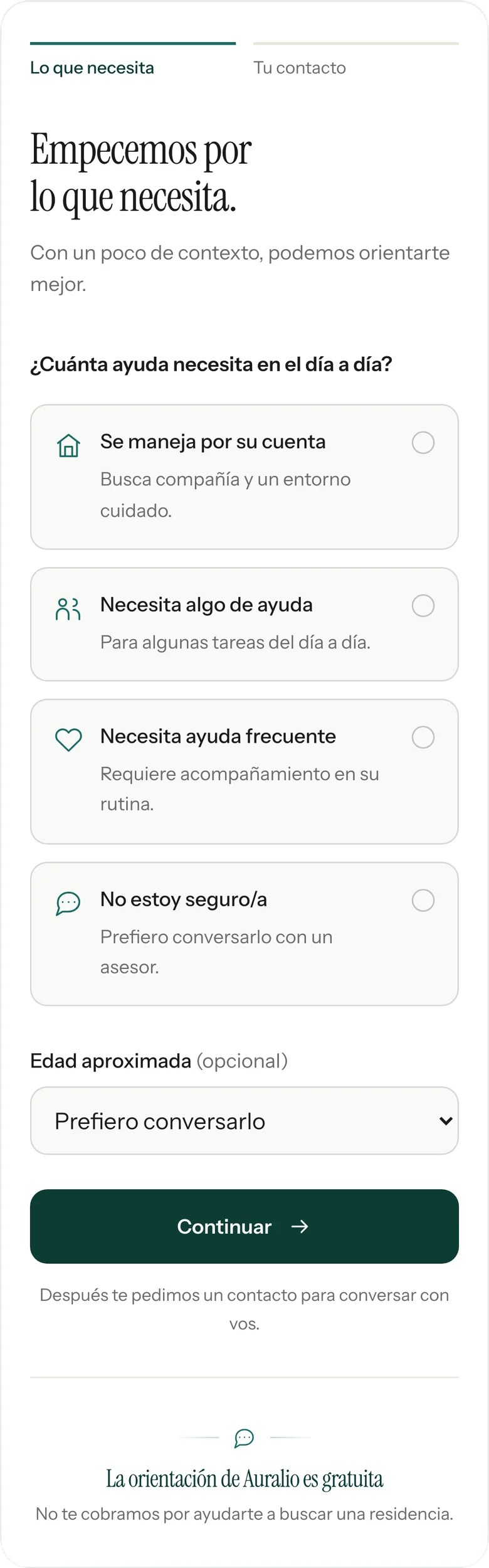
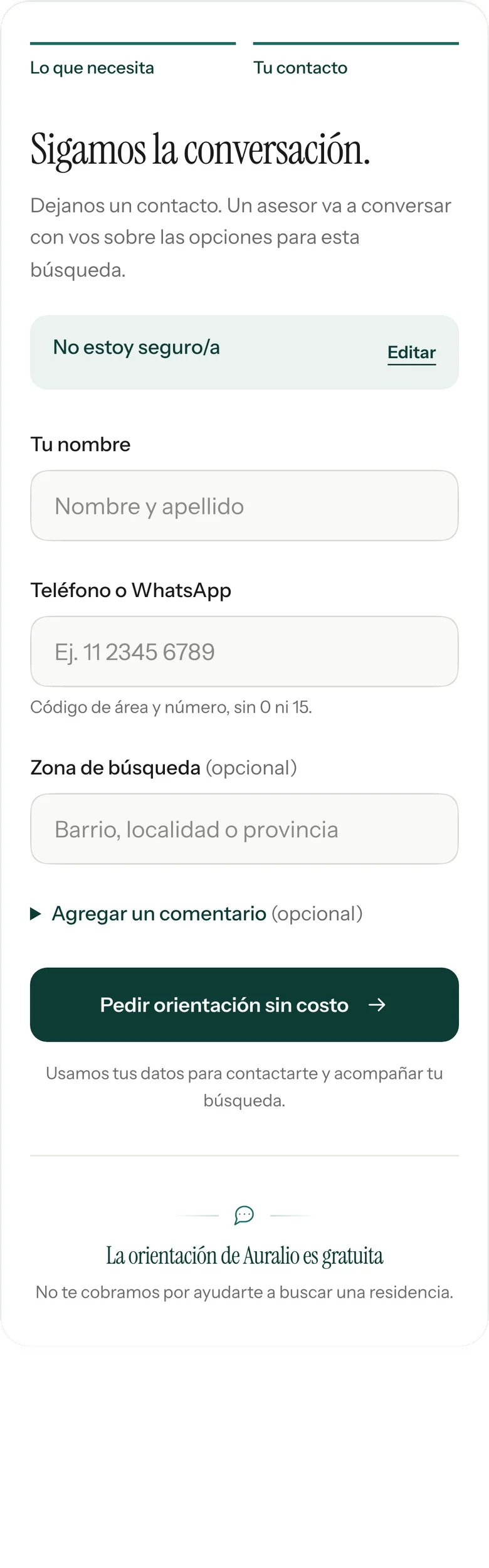
The form opens with an everyday question: how much help the person needs day to day. The answers describe situations anyone can recognize, include “I’m not sure” and leave age as optional. Contact details are only asked for after that.
Next to the form I made clear the guidance is free and with no obligation. The order of the questions and the language had to let someone take the first step even without every answer.
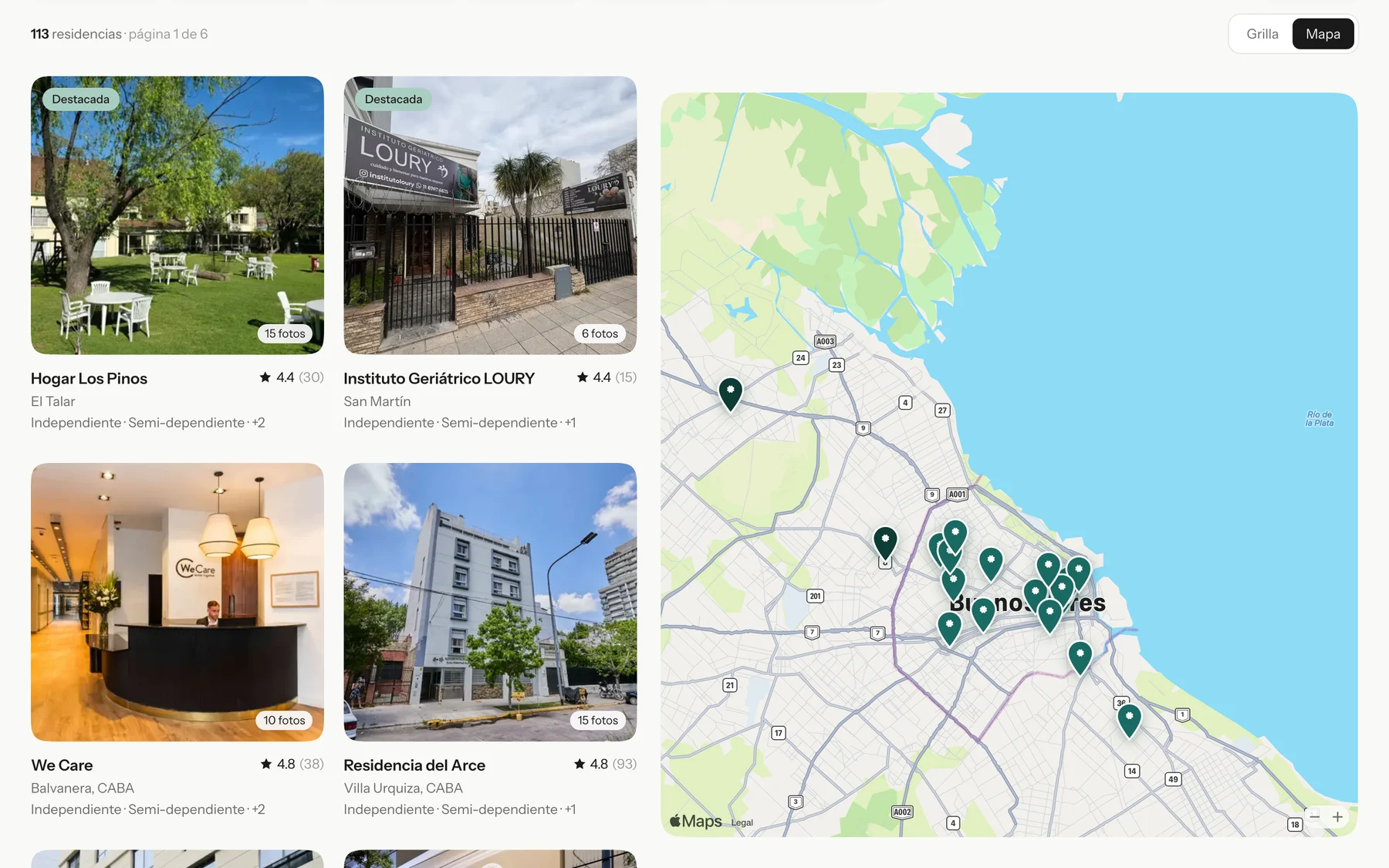
I paired the list with a map so location would be part of the comparison. Distance also affects who can visit a relative and how often. On the development side, filters apply to data already loaded, so people can try different combinations without waiting for a new page on every change.
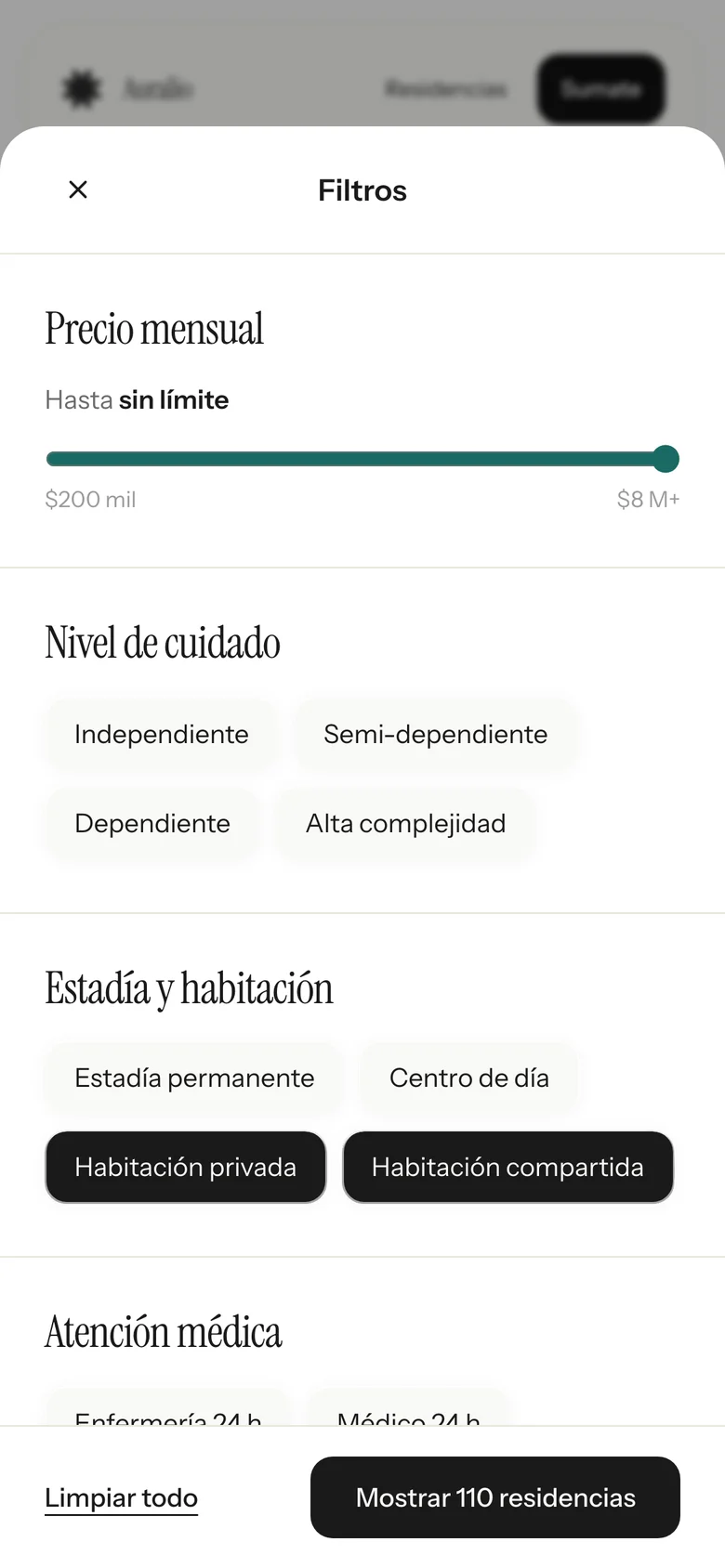
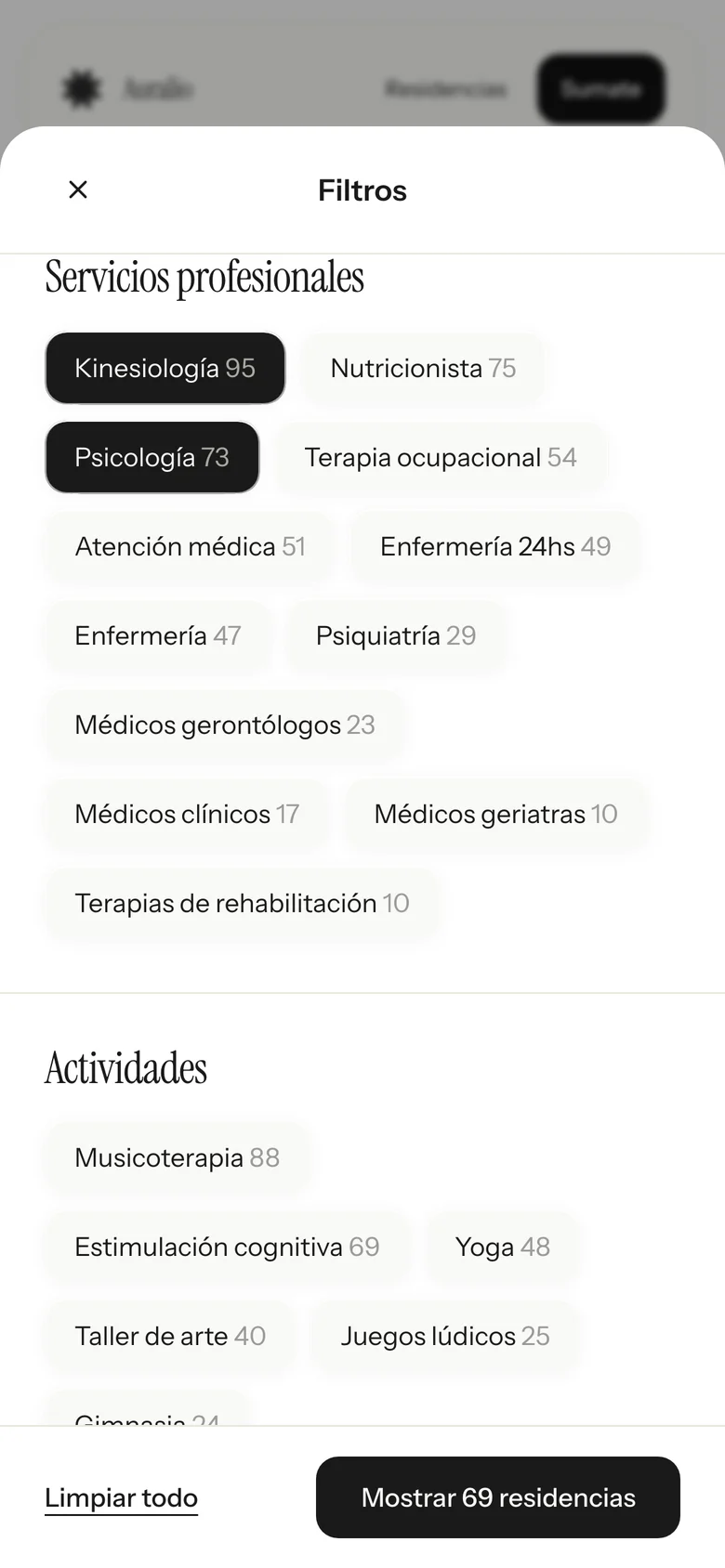
I organized filters by area, budget, length of stay, room, level of care and services. I distinguished alternatives from requirements: choosing two neighborhoods widens the options, while asking for two services requires the home to offer both.
The result count updates before the filters are applied, so people can see how the number of options changes and adjust their selection before landing on an empty list.
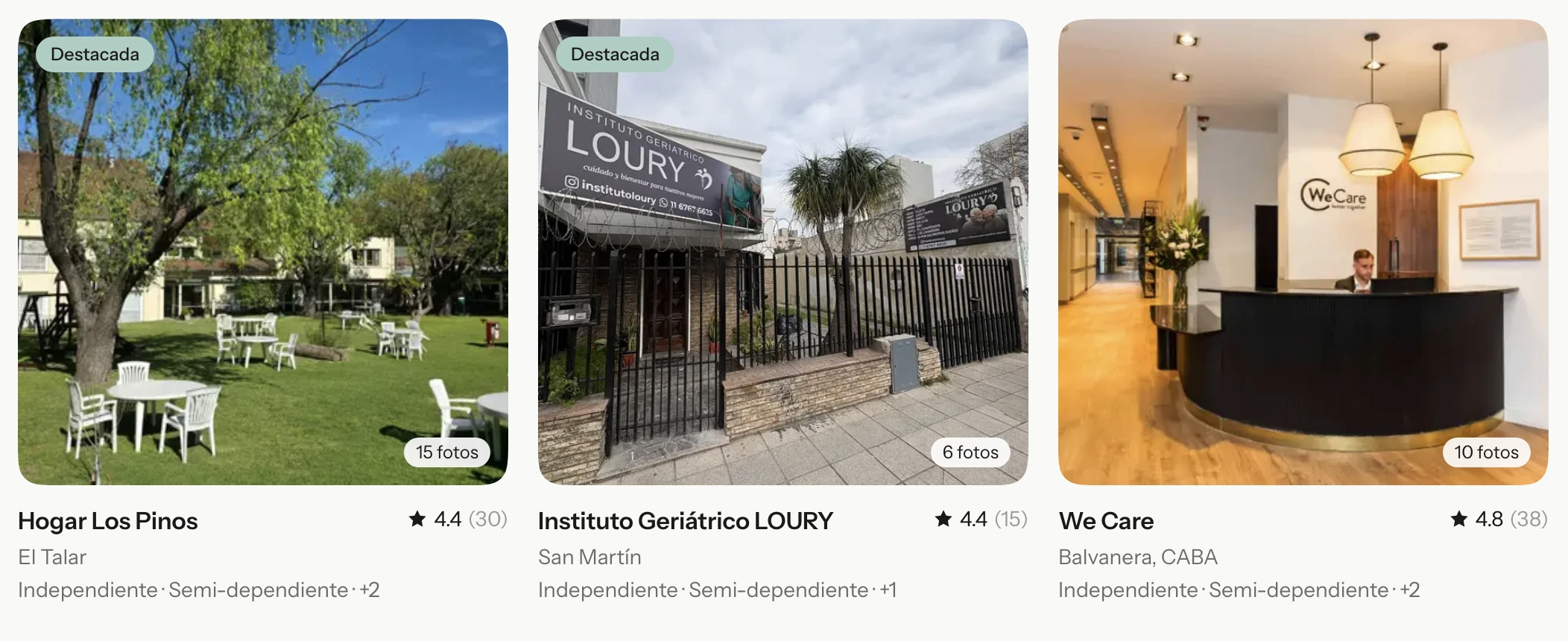
The cards show a photo of the place, the neighborhood, the rating and the levels of care it accepts. I kept services and activities for the detail page, so the first comparison holds a manageable amount of information.
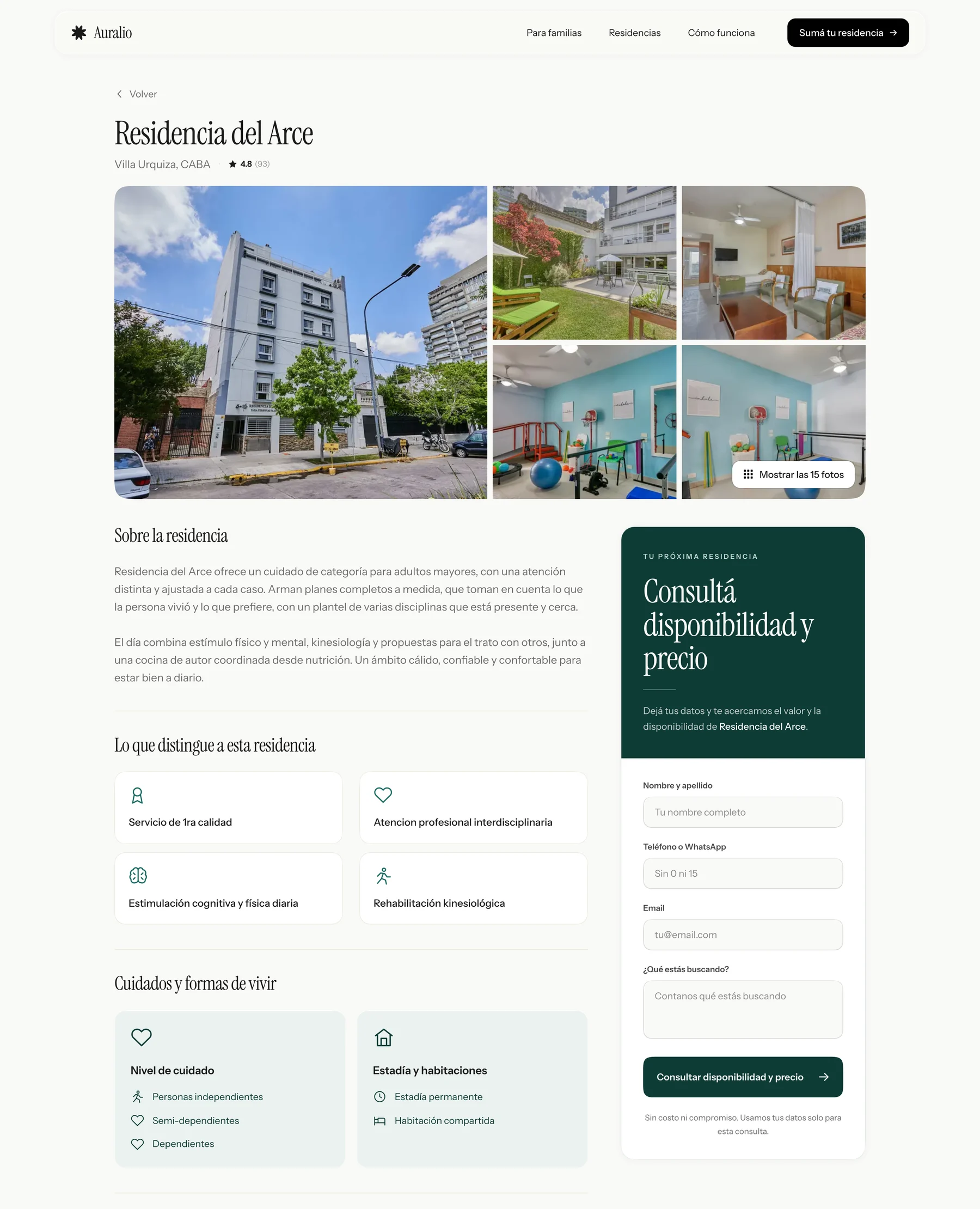
The detail page brings together photos, description, types of stay, care, services and location. The inquiry stays visible while scrolling and identifies which residence it is about.
Since price and availability can vary by room and level of care, that contact lets people talk through their specific case. The information on the page prepares that conversation and helps identify what is still left to work out.
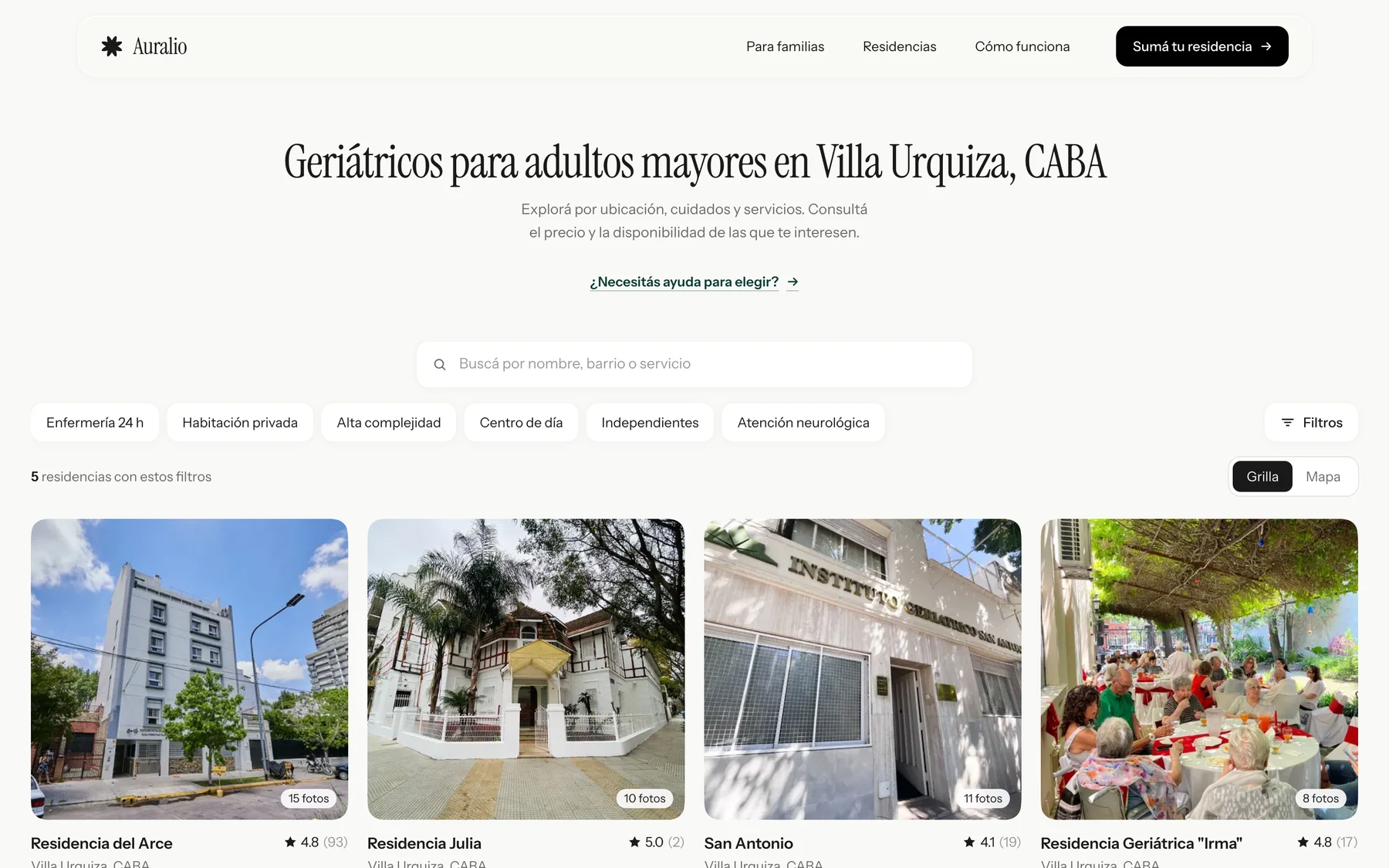
I designed pages for searches like “senior care homes in Villa Urquiza” that open the catalog with that area already selected. Someone arriving with a specific location in mind can start right there. For the homes, these pages are a way to be found by families searching in their area.
I also wrote the descriptions with a consistent structure and voice. Comparing residences means being able to find the same kind of information on every page, as well as recognizing what makes each place different.
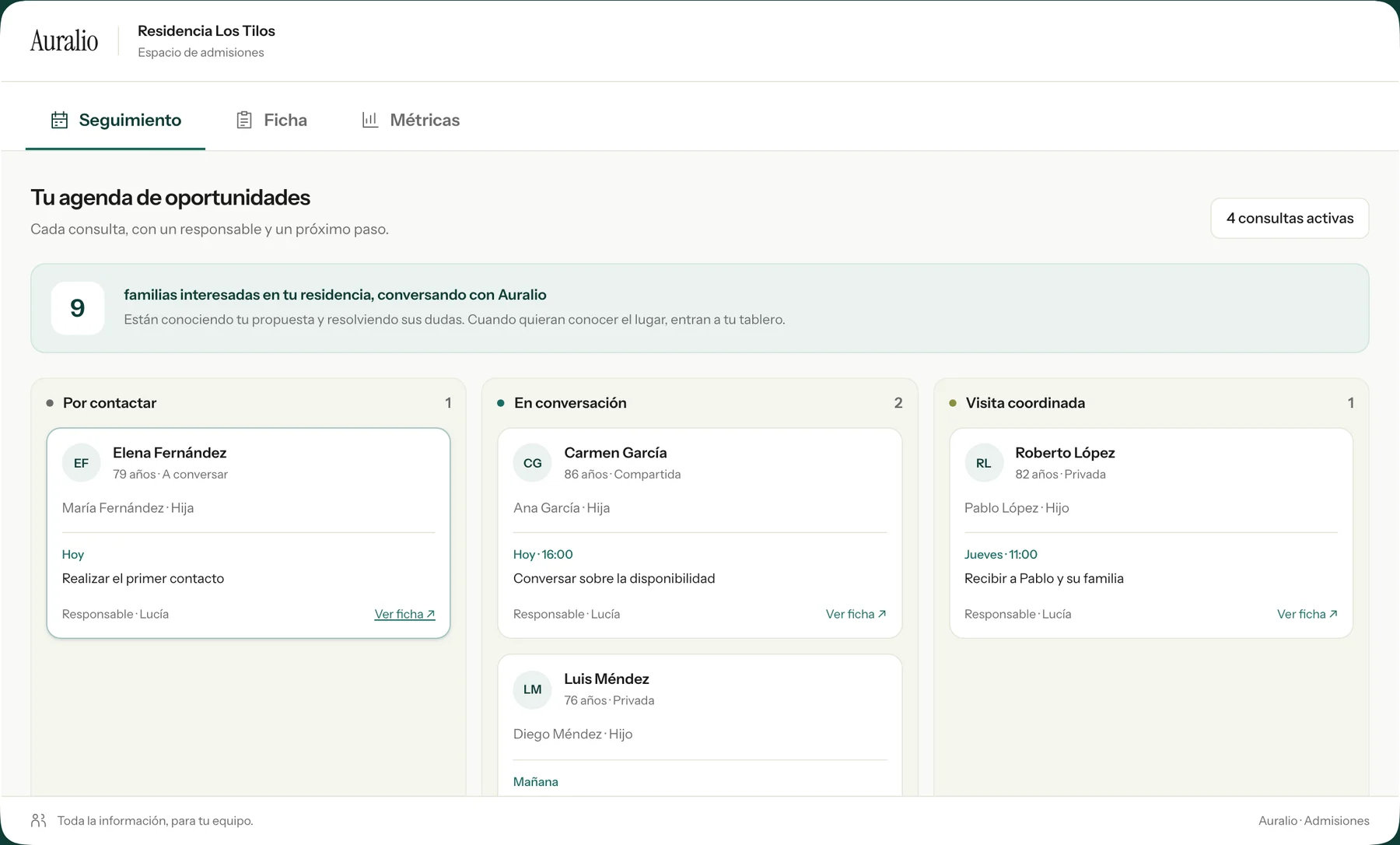
Product concept · demo data
To explore how homes could manage the opportunities coming from Auralio, I designed an admissions dashboard concept. Every inquiry has a stage, an owner and a next step, from first contact through scheduling a visit.
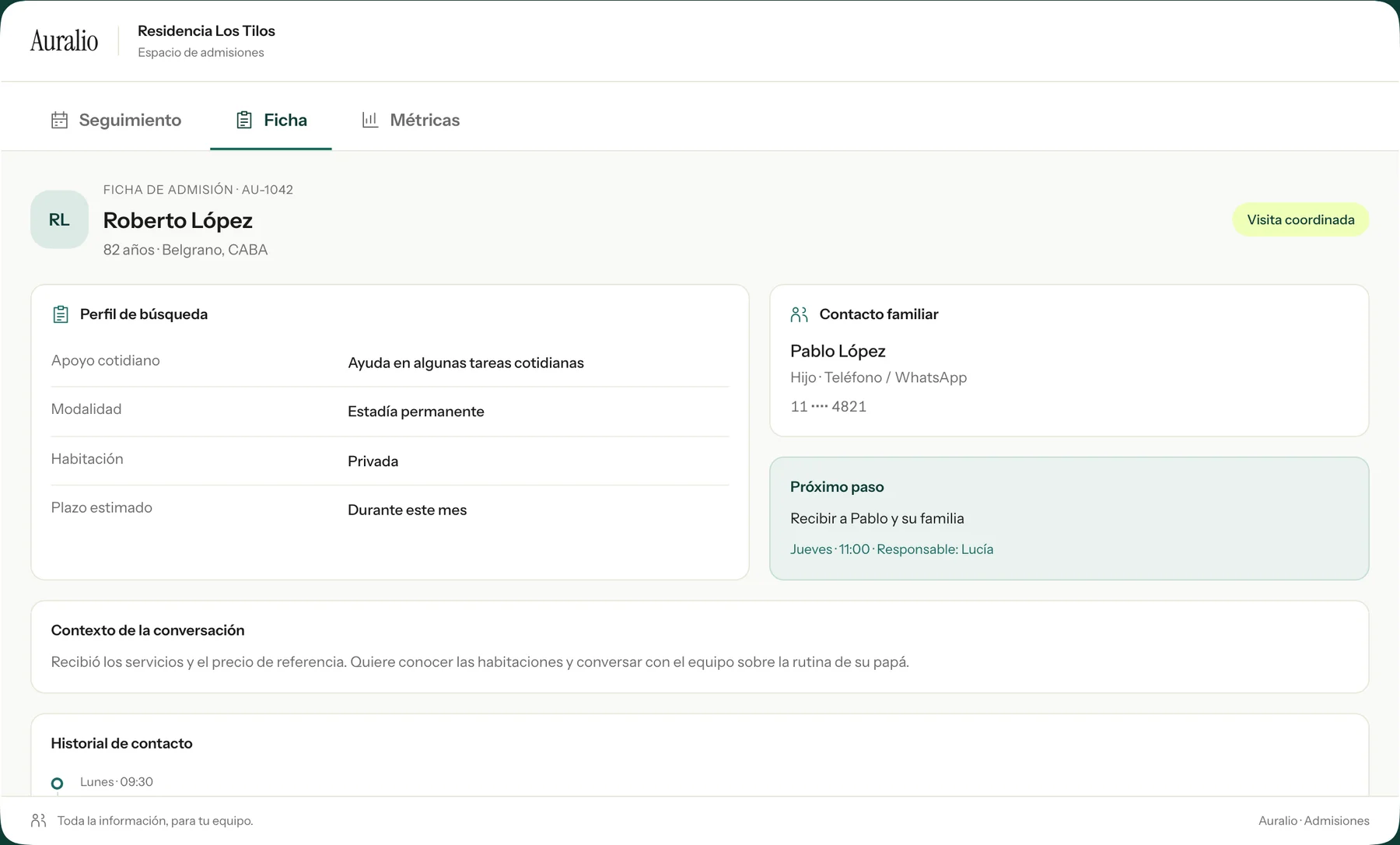
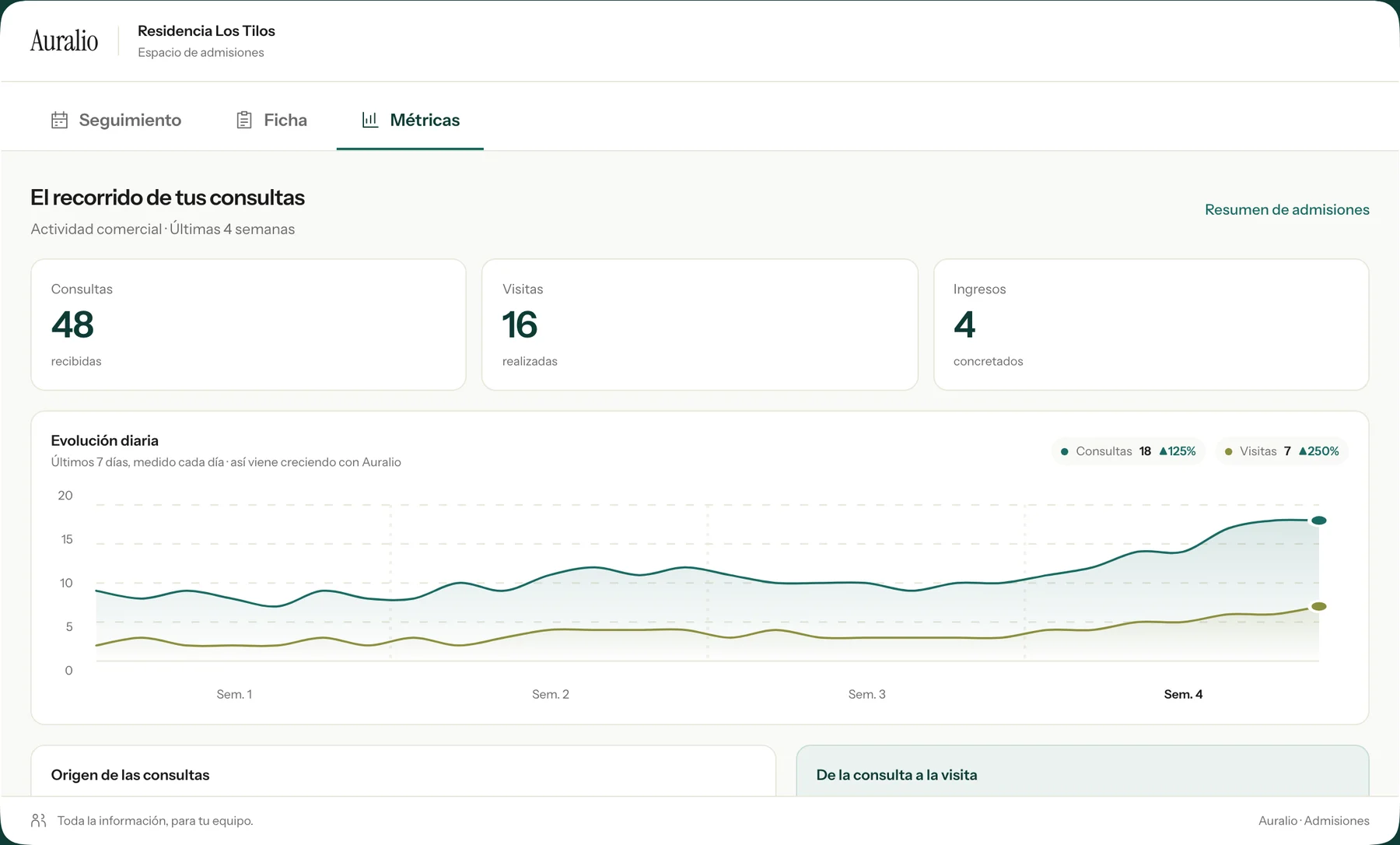
Concept shown with demo data
The record brings together care needs, timing and family context, so whoever picks up the conversation has that information at hand. The metrics show the journey from inquiries to visits and admissions. These screens explore how to support a home’s attention to families from its own operation.
Auralio is live, and we have already signed up more than 50 homes with an initial offer free for three months. That is the way in for homes to get to know the service.
We are working on bringing two homes into the paid client-acquisition service, with a fee for the clients we bring them. Those are still in progress; the next step is validating that commercial offer. The admissions dashboard remains a working concept shown with demo data.
The project led me to treat the family experience and the commercial offer for homes as parts of the same service. Helping someone figure out what they need also means preparing an inquiry with more context for the home. That relationship shaped the form, the filters and the exploration of the admissions dashboard.
With Auralio I got to bring my profession to a field close to my family, and give it an identity tied to my own history.
Explore Auralio