Loading...
Works
Loading...

A platform for reflection and workplace climate analysis
I co-founded Binbi and worked on its strategy, design and development. The product connected a reflection experience for employees with a dashboard for exploring team indicators and trends. After more than 20 interviews with HR teams, we reworked the initial idea and built the technology we sold in 2024 to a company in the industry.
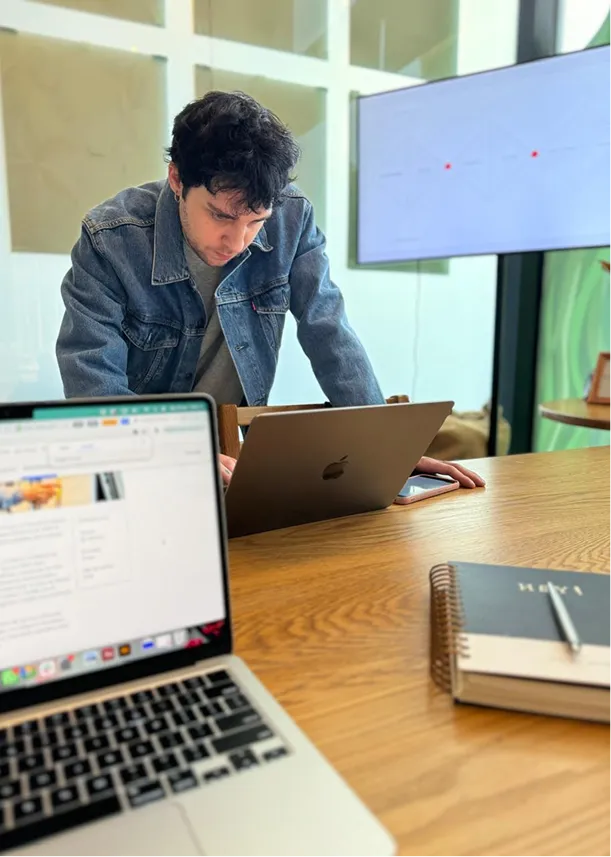
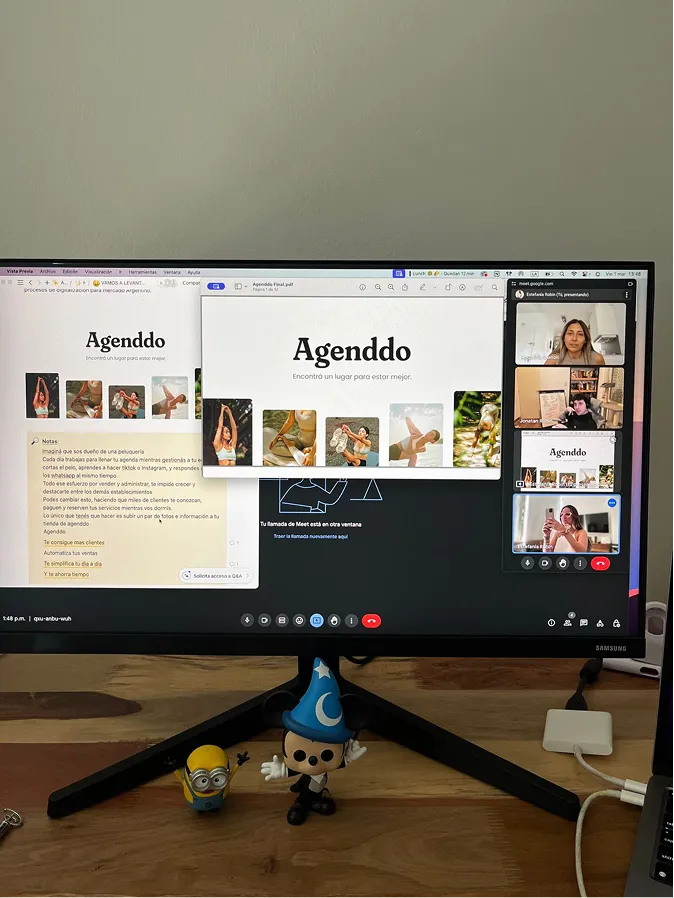
We started with Agenddo, a marketplace for wellness services. When we joined Embarca Ventures, working with mentors led us to revisit that first hypothesis.
Across more than 20 interviews with HR teams, a different need emerged: companies had wellness initiatives, but lacked visibility into how people felt. That finding led us to rethink the proposal and build Binbi around reflection and tracking workplace climate.
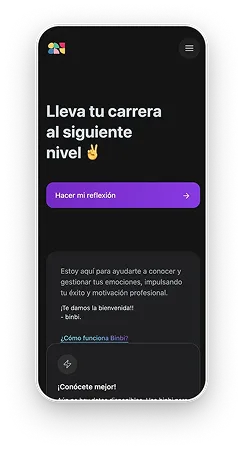
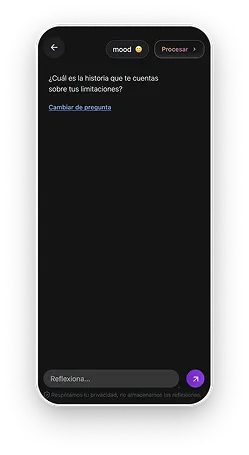
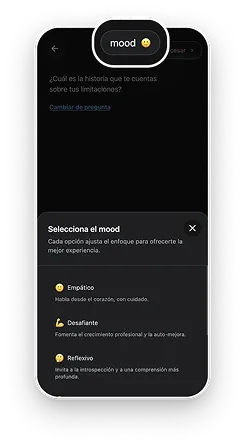
The employee experience started with a question and a space to write in their own words. I designed a short flow, with the option to change the question and choose between an empathetic, challenging or reflective tone.
Those options gave people room to decide how to approach the reflection. The interaction had to make sense for the person answering: offering a chance to pause and think about their experience, beyond generating information for the product.
The system connected several stages. One model generated contextual questions; another translated the text for a specialized classifier, which processed it into 28 categories. On top of those results, a rules layer grouped the signals into seven axes defined for Binbi and used in the dashboard.
The analysis also took into account the question the person had received. It calculated differences and correlations between the classifications of the question and the answer, bringing both sides of the exchange into the processing.
Results were organized by company and department and consolidated periodically to follow their evolution. Question generation, analysis rules and indicator preparation were kept separate from the interface that displayed them. That structure provided a foundation for adapting the processing to another product’s flows.
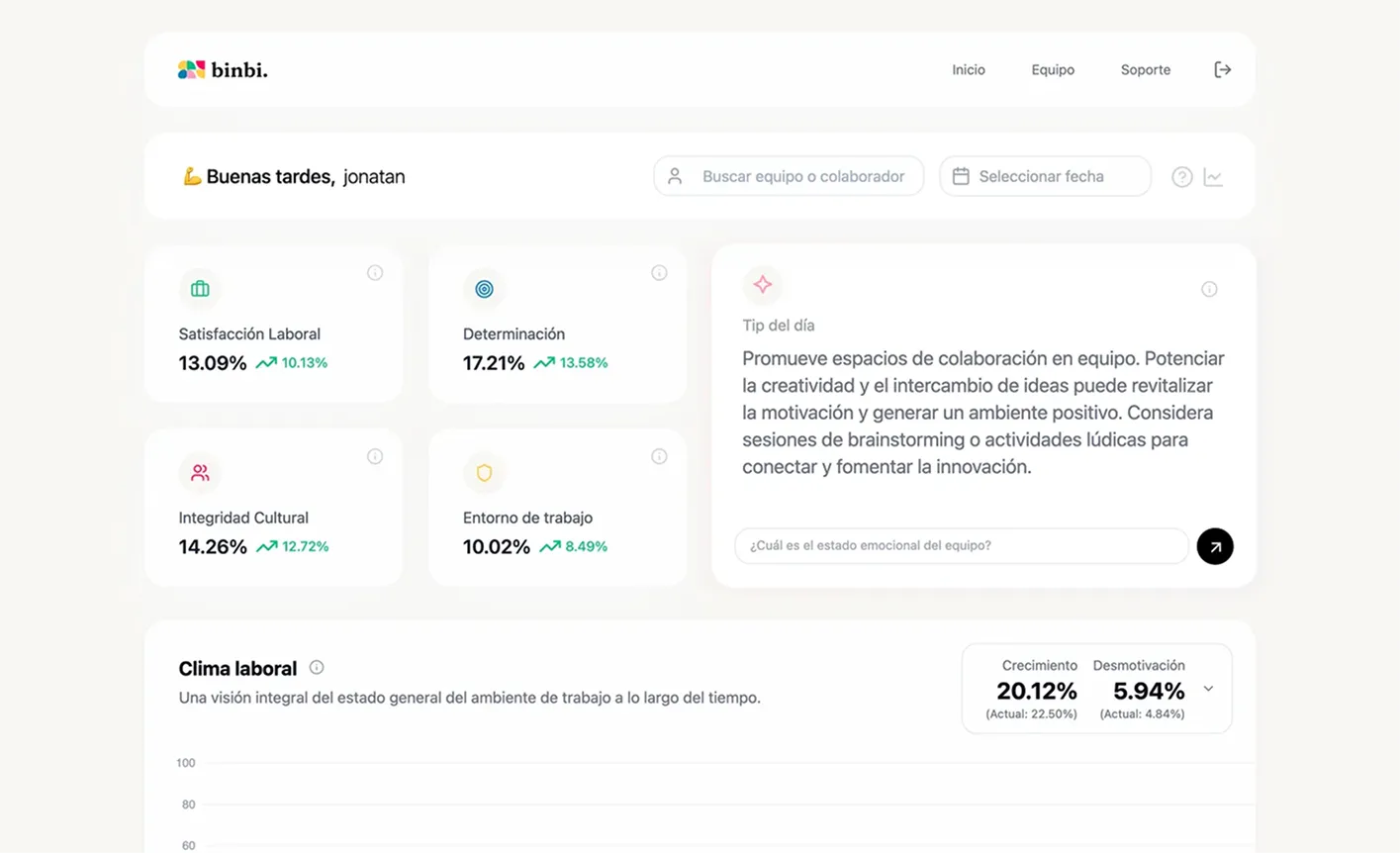
My design work was about giving that information a hierarchy. I organized the dashboard with summary indicators, variations and a timeline chart, to connect the reading of each period with the team’s evolution.
The groupings translated the classifier’s labels into the product’s language: job satisfaction, determination or work environment. They were indicators built from text analysis; their presentation had to let people explore the signals and how they changed.
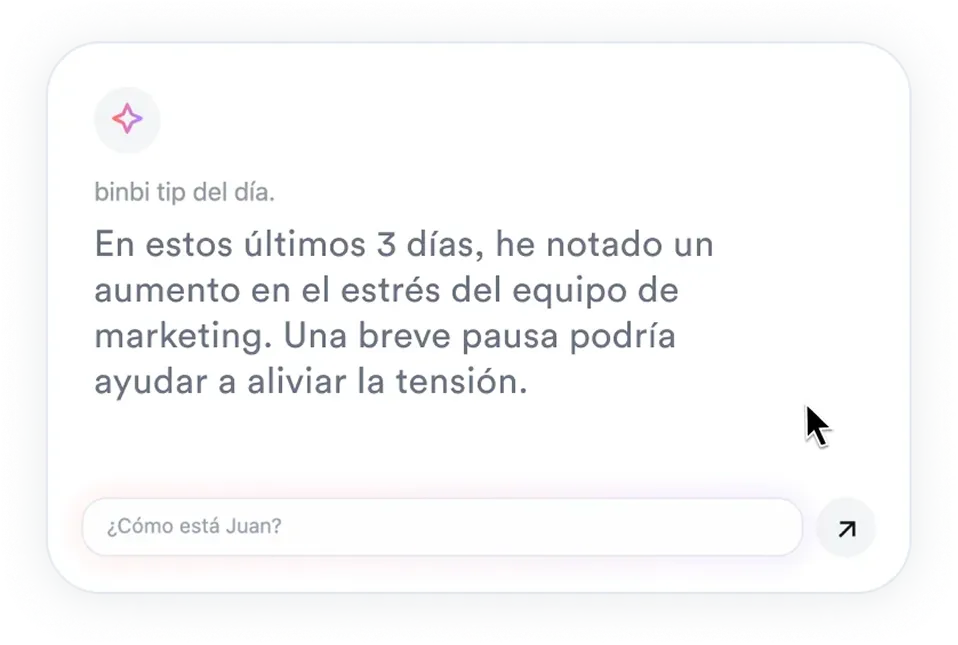
The assistant added another way to explore the information: asking questions and getting suggestions related to the available results. We wanted to connect reading the dashboard with conversations and possible actions by managers.
Original responses were never shown in the managers’ dashboard. The experience kept what each person wrote separate from the indicators derived from the analysis.
Even so, some questions raised doubts or discomfort. We learned that data handling and willingness to answer were related problems: tone, context and the person’s relationship with the tool mattered too.
When we integrated the technology into the acquiring company’s product, we adapted the experience to the habits and flows its users already knew.
I developed an identity based on animated gradients. Colors, blends and motion represented the range of emotional states and how they change over time.
That language connected the identity with Binbi’s central idea: observing something that changes. I carried it into the product’s presentation and paired it with a more restrained dashboard interface, where indicators and trends took priority.
Emprelatam helped us prepare the proposal for the market. We had designed Binbi for small companies, but the first strong interest came from organizations with hundreds of employees. Serving them required an operational capacity and a product scale we were still building.
In parallel, we were working with an HR company and exploring how to integrate our technology into their SaaS. They already had clients and a sales operation; we had built the processing that connected responses, classifications and indicators, along with an experience for exploring them.
In 2024 we sold the technology and continued its evolution within that product. The integration gave continuity to the work built at Binbi and allowed it to adapt to an existing context of use.
The lesson was to revisit our decisions based on what we found: the interviews changed the initial problem, usage put trust at the center, and commercial interest led us to rethink how to bring the technology to companies.